Compound interest is inconspicuous - and that's exactly why almost everyone underestimates it. Its secret is the time, not the amount of the amounts.
Interest on interest
You not only get a return on your savings, but also on the returns from previous years. This effect does not grow linearly, but exponentially. Little seems to happen in the beginning - the real power only unfolds in the later years, when the interest on the interest exceeds the actual deposits.
Those who start at 25 easily beat those who start at 35 and save twice as much. Time wins.
An example that wakes you up
200 € per month, 7% return on average: after 10 years you will have around 34,000 €. After 40 years? Over €500,000. The biggest part of it isn't what you deposited - it's the interest on the interest. You only pay €96,000 over forty years; The effect itself creates the rest.
The hockey stick curve
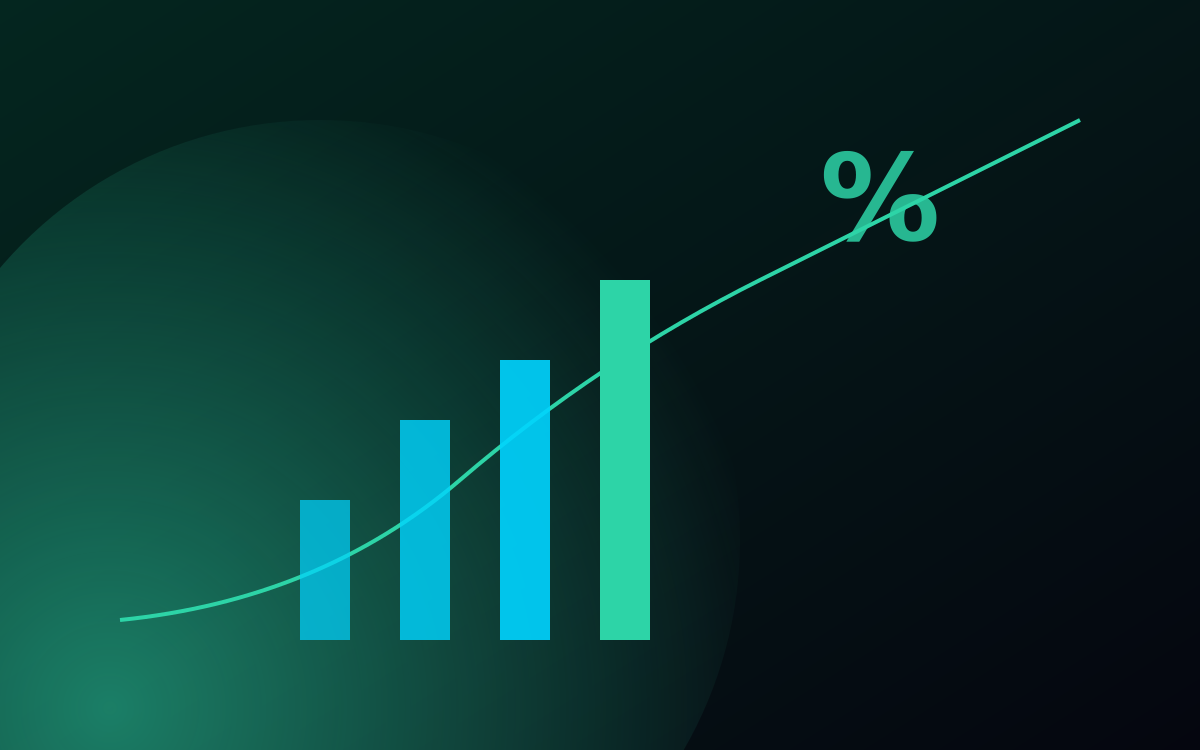
Imagine the course as a curve: flat for a long time, then suddenly steeply upwards. It is precisely this late kink that makes many people give up too early. You save for five years, see little and stop – just before the curve gets interesting. Anyone who knows the pattern will persevere.
Compound interest also works against you.
The same principle applies to debt. High-interest credit card debt grows just as relentlessly – only to your detriment. That's why it's important to pay off expensive debts before investing. The effect is neutral; What matters is which side you're on.
The Rule of 72
There's a simple mental math trick to feel the power of compound interest: Divide 72 by your annual interest rate, and you get roughly the number of years until your money doubles. For 7 percent it takes around ten years, for 9 percent it only takes eight. This little formula immediately shows why a few percentage points more returns make a huge difference over decades.
It also shows how expensive high interest rates are: a debt at 18 percent doubles in just four years if you don't pay it off. The same math that builds wealth for you can stack debt against you - faster than most realize.
The only rule that matters
- Starting early beats paying in big.
- Sticking with it beats perfect timing.
- Patienceis the real return.
The hardest part isn't the math. It's waiting long enough for it to work for you. The best day to start was ten years ago - the second best is today. And even those who are late shouldn't give up: the effect still has a remarkable impact even after twenty years. It's never about mourning the time lost, but about making the remaining time work for you in the best possible way.
Compound interest: The most powerful tool that no one uses properly
𝕏 Tweet

Be the first to comment.